Food Markets
How food markets change once summer produce ends
Market stalls shift stock as the growing season winds down. Summer vegetables and soft fruit give way to squash, root vegetables, mushrooms, chestnuts and game, and the character of a market visit changes with them.
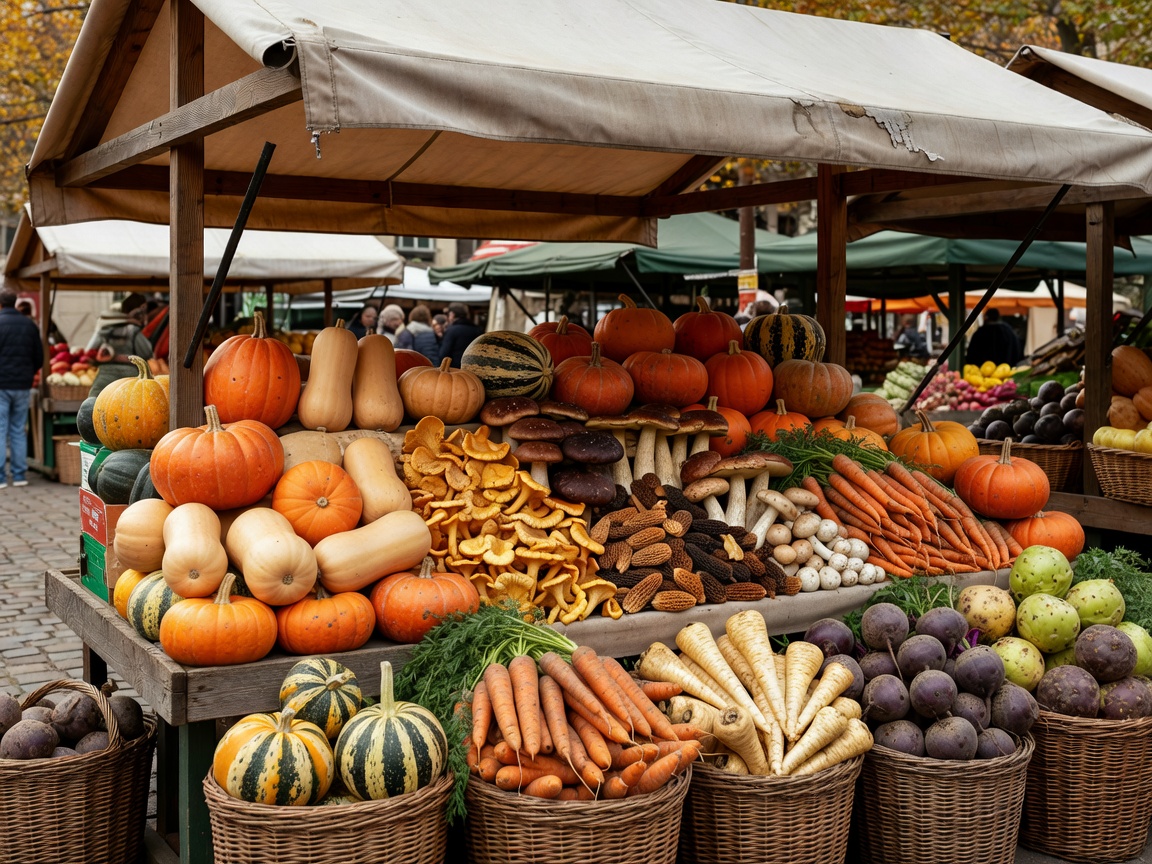
What changes on the stalls
Where a stall in high summer might centre on tomatoes, courgettes and stone fruit, the same stall later in the season typically carries pumpkins and other squash, leeks, mushrooms, chestnuts and the first apples and pears of the season. Game such as pheasant or venison appears on butchers' stalls in regions where hunting is part of the rural economy, alongside the usual poultry and cured meats.
Forest produce and a note on foraging
Wild mushrooms sold at markets are typically gathered by professional foragers who know which species are safe, but anyone gathering mushrooms independently should have any find checked by a pharmacist or other qualified person before eating it. Misidentifying wild mushrooms carries real health risk, and this guide does not offer identification advice — that judgement belongs with a qualified professional.
Regional specialities to look for
Different regions carry their own stall traditions. South-western markets often feature foie gras production and duck-based dishes such as confit. Cassoulet, a slow-cooked bean and meat dish, is strongly associated with Languedoc, in towns such as Castelnaudary, Toulouse and Carcassonne. Alpine regions lean toward cheese-based dishes as the weather cools. None of these dishes is exclusive to a single market, but their presence tends to track the regional produce on sale.
Market formats worth knowing
Markets in France fall into a few broad formats. Open-air markets set up outdoors on fixed days of the week, often in a town square, and pack away afterward. Covered markets, sometimes called halles, operate from a permanent building and tend to run more regularly across the week. Farmers' markets focus specifically on producers selling their own goods directly, rather than resellers. Knowing which format a town offers helps set expectations for how full or quiet the stalls will be on any given day.
Comparing market formats
| Market Type | Frequency Pattern | Typical Setting | Best For |
|---|---|---|---|
| Open-air weekly market | One or two fixed days a week | Town square or main street | Broad browsing, atmosphere |
| Covered market (halles) | Regular, most days | Permanent indoor building | Weather-independent shopping |
| Farmers' market | Varies by location | Often smaller, producer-run stalls | Buying direct from growers |
Practical notes for a market visit
Markets tend to be at their fullest earlier in the morning, before the best produce is picked over. Carrying small denominations of cash remains useful, since not every stallholder accepts cards. A simple greeting on approaching a stall is standard courtesy, and asking before handling produce directly is generally appreciated.
Markets and the harvest calendar
Much of what appears on a market stall traces directly back to the regional harvest described in the wine and harvest guide, so the two are worth reading together when planning a trip.