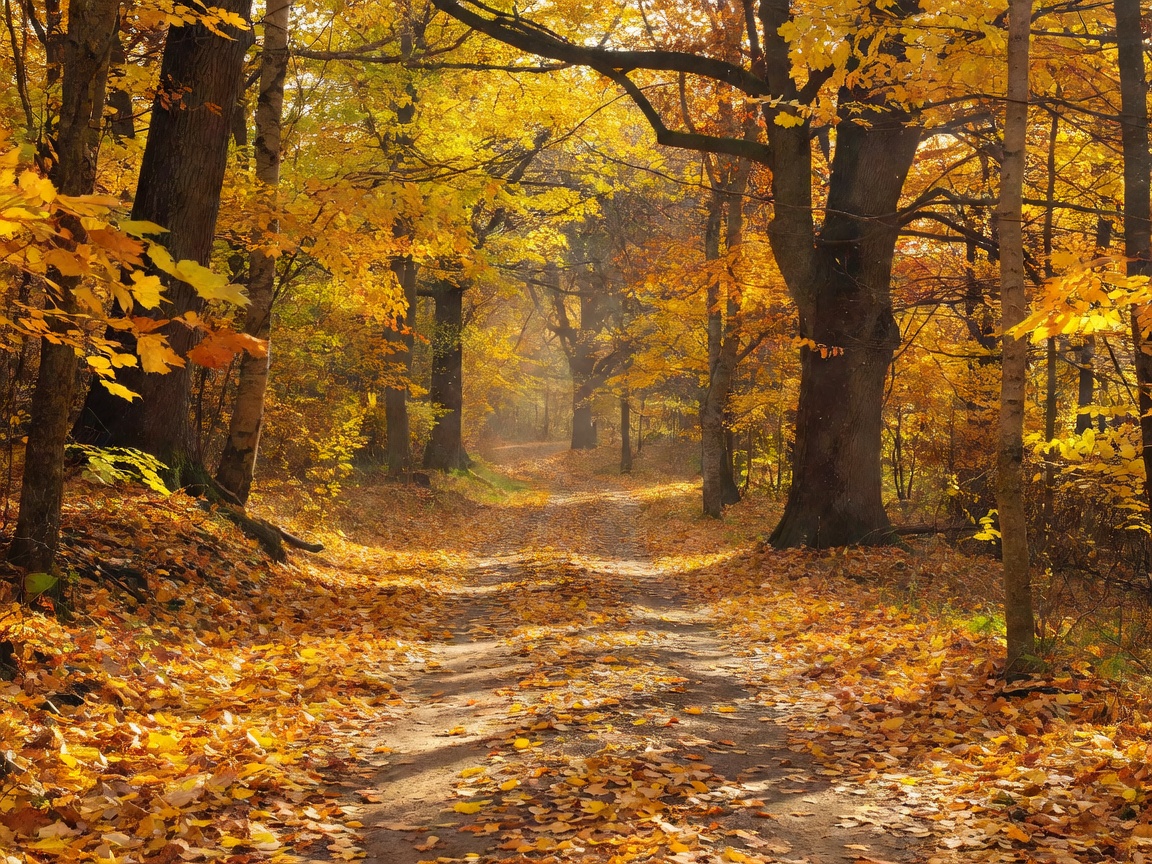
How autumn colour develops
Deciduous trees change colour as chlorophyll production slows with shorter days and cooler temperatures, revealing the yellow, orange and red pigments that were present in the leaf all along but masked by green during the growing season. This process moves through a region gradually rather than all at once, typically starting at higher altitude and in cooler northern areas before reaching lower, milder ground. Because the exact timing depends on that year's specific weather rather than a fixed calendar date, colour change should be treated as a general seasonal pattern rather than something predictable to a set week.
Regions with different landscape types
Forest regions such as Fontainebleau, south of Paris, and the wooded slopes of the Vosges in the east offer dense deciduous woodland well suited to walking among changing colour. Alsace combines forested hillsides with vineyard terraces, giving a landscape that mixes agricultural and woodland colour change in a fairly compact area. The Loire Valley pairs riverside woodland with formal gardens attached to its historic estates, so colour change there is often viewed alongside built landscape features rather than in open wilderness. Coastal regions, including Brittany and Normandy, offer a different kind of autumn landscape built around cliffs, beaches and changing light on water rather than woodland colour, with fewer deciduous trees directly on the coastline itself. Mountainous areas in the Alps and Pyrenees combine early alpine colour change at altitude with the option of clear, crisp air and long sightlines on clearer days.
| Region | Landscape type | Best for |
|---|---|---|
| Fontainebleau & the Île-de-France forests | Dense deciduous woodland | Walking among colour change near Paris |
| Alsace & the Vosges | Forested hills and vineyard terraces | Combining woodland and agricultural colour |
| Loire Valley | Riverside woodland and formal gardens | Colour change alongside historic estates |
| Brittany & Normandy coast | Cliffs, beaches, coastal light | Landscape built around water and sky |
| Alps & Pyrenees | Alpine slopes and open sightlines | Early colour change at altitude, clear air |
Choosing where to go
A visit focused on colour change alone points towards forested regions such as Fontainebleau, the Vosges or the Loire Valley, where deciduous woodland is dense and accessible on foot. A visit prioritising open scenery and long views points towards mountain areas, accepting that access can depend on road and path conditions changing through the season. A visit prioritising milder weather and dry conditions over dramatic colour change points further south, where the trade-off is a landscape that changes more subtly. None of these are mutually exclusive within a longer trip that covers more than one region, though travel time between them should be factored into a realistic itinerary.